What Is Sensory Stimulation? A Clear Guide
- Shahram Ariafar
- Apr 2
- 6 min read

A student covers their ears when the room gets loud, another rocks gently during circle time, and a third seems to wake up only when movement is built into the lesson. These are not random behaviors. They are often responses to sensory input. If you have ever asked, what is sensory stimulation?, the practical answer is simple: it is the input we receive through the senses, and the intentional ways that input can be used to support regulation, attention, learning, and well-being.
For professionals in schools, therapy settings, and care environments, sensory stimulation is not a trend or an add-on. It is part of how people experience safety, connection, and readiness to participate. When sensory needs are overlooked, behavior is often misunderstood. When they are understood well, the environment becomes more accessible and more humane.
What is sensory stimulation in practice?
Sensory stimulation refers to input that activates the nervous system through the senses. Most people first think about sight, sound, touch, taste, and smell. In educational and therapeutic practice, it also includes vestibular input, which relates to movement and balance, and proprioceptive input, which relates to body awareness, pressure, and muscle-joint feedback.
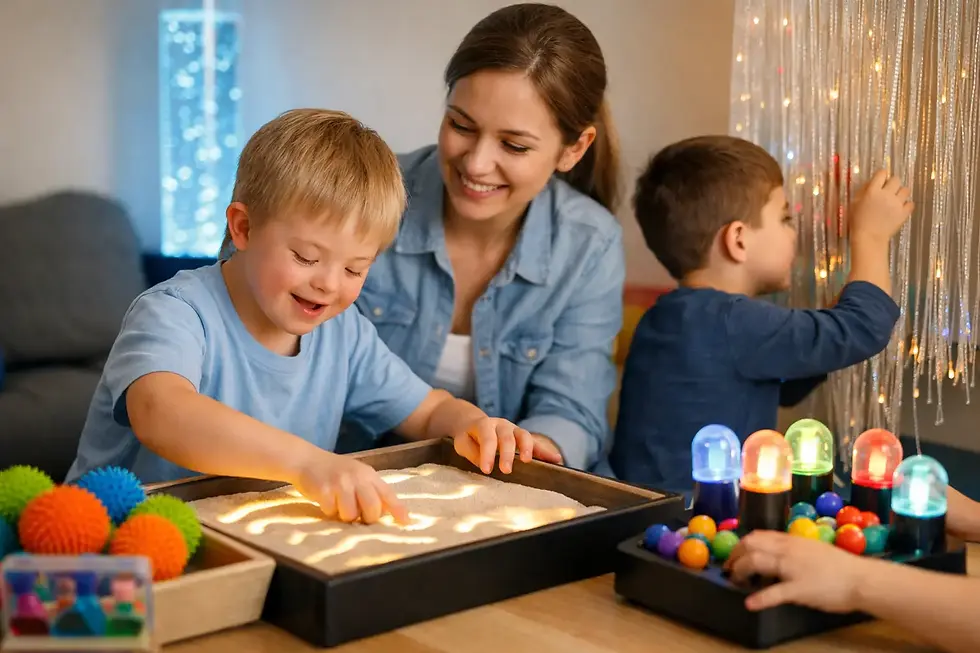
In practice, sensory stimulation can happen constantly and naturally. Fluorescent lights, chair noise, fabric textures, hallway traffic, and the pace of transitions all provide sensory input. It can also be planned and purposeful, such as using a rocking chair for calming, a textured material for tactile exploration, or a dimmed space for recovery after overload.
That distinction matters. Sensory stimulation is not always beneficial simply because it is present. The same input can support one person and overwhelm another. A music activity may increase engagement for one learner and trigger distress for another. A weighted item may support body awareness for one student and feel restrictive to someone else. Sensory support always depends on the person, the context, and the goal.
Why sensory stimulation matters for learning and behavior
The nervous system is not separate from learning. Before a person can attend, communicate, explore, or manage demands, they need a level of regulation that makes participation possible. Sensory input can either help create that regulation or disrupt it.
When a learner is under-responsive, they may seem tired, passive, slow to engage, or hard to motivate. They may need stronger or more frequent input to become alert and ready. When a learner is over-responsive, everyday sensations can feel intense, unpredictable, or even threatening. In that state, the priority becomes protection, not instruction.
This is one reason sensory stimulation should never be reduced to a set of activities. It is part of a broader understanding of access. A well-designed sensory environment can reduce distress, increase time on task, support communication, and improve emotional safety. Poorly matched input can do the opposite, even when the intention is good.
The senses involved in sensory stimulation
Visual input includes light, color, contrast, movement, and visual complexity. Some learners focus better with reduced visual clutter, while others benefit from strong visual cues and structure.
Auditory input includes volume, pitch, rhythm, repetition, and background noise. For some individuals, predictable sound supports attention. For others, layered sound quickly leads to overload.
Tactile input includes touch, temperature, texture, and vibration. Tactile experiences can support exploration and body awareness, but they can also trigger defensiveness if introduced too quickly.
Vestibular input comes from movement and changes in head position. Swinging, rocking, spinning, and balance activities all affect this system. Vestibular input can be organizing, but it needs to be used thoughtfully because it can also dysregulate.
Proprioceptive input involves pressure, resistance, pulling, pushing, carrying, and heavy work. This type of input is often grounding and can support body awareness, motor planning, and calming.
Olfactory and gustatory input, related to smell and taste, are also highly meaningful. These senses are often underestimated, yet they can strongly affect comfort, memory, appetite, and emotional response.
What sensory stimulation is not
It is helpful to name a few common misunderstandings. Sensory stimulation is not just about helping a person calm down. It can also support alertness, engagement, curiosity, communication, and play.
It is not limited to people with autism or profound disabilities. Many children and adults benefit from sensory-informed environments, including those with ADHD, developmental delays, trauma histories, intellectual disabilities, acquired brain injuries, or high stress levels.
It is also not the same as filling a room with lights, sounds, and equipment. More input is not automatically better. In fact, overstimulation is a frequent problem in classrooms and institutions. The quality, timing, intensity, and purpose of sensory input matter more than the quantity.
What is sensory stimulation used for?
In professional settings, sensory stimulation is usually used with a clear functional purpose. It may help a learner settle into the day, transition between activities, tolerate group settings, improve attention, expand play, or recover after stress. In some cases, it supports communication by creating a more regulated state. In others, it helps staff understand what an individual is expressing through behavior.
Sensory stimulation can also be used to build meaningful experiences for individuals with complex needs. For a person with limited verbal language or reduced mobility, sensory experiences may be a primary route to connection, choice-making, and enjoyment. This is especially important in settings where quality of life must be considered alongside educational or care goals.
How to use sensory stimulation well
The best sensory work starts with observation, not equipment. Professionals need to ask practical questions. What seems to help this person become more organized? What tends to trigger withdrawal, agitation, or avoidance? At what times of day is regulation hardest? Which demands increase sensory stress?
From there, support should be tailored. A student who seeks movement may benefit from planned movement breaks before seated work. A learner who is overwhelmed by noise may need acoustic adaptation, predictable routines, and a lower-arousal workspace. Someone with profound and multiple disabilities may need carefully paced sensory experiences that allow time for anticipation, response, and recovery.
Pacing matters. So does co-regulation. Sensory stimulation is rarely effective when delivered in a rushed or mechanical way. The professional relationship, the emotional tone of the space, and the person’s sense of control all influence the outcome.
Sensory stimulation and the environment
One of the most effective interventions is often environmental adaptation. Reduce glare. Organize visual materials. Create quieter zones. Offer supported seating. Build movement into the schedule instead of treating it as a reward. Provide access to sensory tools without making the learner feel singled out.
This shifts the focus from fixing the person to improving participation. That is an important professional mindset. Inclusive practice grows when environments are designed with sensory access in mind from the start.
Sensory stimulation and professional judgment
There is no universal sensory menu that works for everyone. A strategy that succeeds in one classroom may fail in another. A learner’s needs may also change over time due to fatigue, health, stress, development, medication, or transitions.
That is why professional judgment is essential. Staff need enough knowledge to distinguish between sensory preference, sensory need, habit, and distress. They also need shared language across the team so that responses are consistent and thoughtful.
For many schools and institutions, this is where training and consultation make the biggest difference. When teams understand how to interpret sensory behavior and translate that understanding into everyday practice, they gain professional confidence and create better conditions for mastery, learning, and joy. This is the kind of practical sensory-based support that organizations such as Special Needs Toys Norway work to strengthen through training and tailored guidance.
When sensory stimulation helps most
Sensory stimulation tends to be most effective when it is individualized, goal-oriented, and embedded in daily routines. It works best when professionals know why they are using it and what signs indicate that it is helping.
It is also most useful when the person has some form of choice or predictability. Even small choices, such as selecting between two calming inputs or knowing when a movement break is coming, can reduce anxiety and improve engagement.
There are trade-offs. A highly stimulating sensory room may be valuable for one session and too activating before academic work. Deep pressure may help one person regulate yet be inappropriate for another without clear consent and training. Good practice means staying curious, responsive, and willing to adjust.
Sensory stimulation, at its best, is about more than input. It is about dignity. It recognizes that behavior is communication, that participation depends on accessibility, and that many learners need environments that meet the nervous system before they can meet the task.
That perspective changes everyday practice. It encourages professionals to look beyond compliance and ask a better question: what does this person need in order to feel safe enough, organized enough, and supported enough to take part? Often, the answer begins with the senses.
You Are Not Alone – We Are Here to Help
Finally, we want to remind you that you are not alone. Many families, schools, kindergartens, and care institutions face similar challenges—and there are effective solutions. We have extensive experience supporting and guiding others in finding practical, tailored approaches to accommodation, sensory support, and inclusion.
If you would like more concrete support, we encourage you to explore our courses and consultations. Together, we can create a better everyday life.


Comments