What Tactile Stimulation Supports

A student who avoids glue, pulls away from hand-over-hand support, or chews on sleeves during group time is often telling us something important. Tactile stimulation is not a minor sensory detail in these moments. It can shape regulation, attention, participation, and a person’s sense of safety in the learning environment.
For professionals working in special education, therapy, and care settings, touch-based input is rarely neutral. It can calm, alert, organize, distract, or overwhelm depending on the person, the timing, and the way it is offered. That is why tactile work deserves more than a bin of sensory materials and good intentions. It requires observation, planning, and respect for individual differences.
What tactile stimulation means in practice
Tactile stimulation refers to input received through the skin. This includes light touch, deep pressure, texture, temperature, vibration, and contact with materials such as sand, fabric, foam, water, clay, or adapted tools. The tactile system helps us register what we are touching, where contact is happening, and whether that input feels pleasant, irritating, or threatening.
In educational and care environments, tactile input affects more than sensory play. It can influence body awareness, motor planning, emotional regulation, attention, self-care, feeding, tolerance for clothing, and willingness to participate in routine tasks. For some learners, the right tactile experience supports focus and confidence. For others, the same experience may trigger withdrawal, defensiveness, or distress.
That difference matters. A tactile strategy is only supportive when it matches the person’s sensory profile, current state, and goals.
Why tactile stimulation matters for learning and regulation
Many professionals first notice tactile needs through behavior. A child refuses finger paint. An adult in a care setting repeatedly rubs textured surfaces. A learner becomes distressed during dressing, grooming, or transitions involving touch. These are not random reactions. They may reflect how the nervous system is processing tactile input.
When tactile processing is working well enough for the demands of the environment, a person can engage with materials, tolerate everyday touch, and use their hands in purposeful ways. When tactile processing is difficult, seemingly simple tasks can become exhausting. The learner may spend significant energy protecting themselves from input that others barely notice.
This is one reason tactile support can have a meaningful impact on participation. A more accessible sensory environment may improve readiness for instruction, reduce avoidant behavior, and increase tolerance for routines that previously felt too demanding. It can also support joy. Touch is not only functional. It is connected to comfort, curiosity, play, and connection.
Tactile stimulation is not one-size-fits-all
A common mistake is assuming that more sensory input is always better. In practice, some individuals seek strong tactile experiences while others are highly selective or defensive. Some benefit from messy play. Others do better with predictable, structured materials that allow control and distance.
A learner who avoids wet textures may still enjoy firm pressure through dough. Someone who dislikes unexpected touch may tolerate hand contact well when they initiate it and know what is coming next. Another may need tactile activities paired with visual structure, clear language, and gradual exposure.
This is where professional judgment becomes essential. The question is not simply, "What tactile activity should we use?" A better question is, "What type of touch supports this person’s regulation, access, and dignity right now?"
Signs tactile processing may need closer attention
Tactile differences show up in many ways, and not all of them look sensory at first. A learner may avoid art, resist grooming, reject certain clothing, or struggle with transitions that involve close contact. They may seek constant touch, crash into soft surfaces, rub objects on their skin, or mouth non-food items. Some become dysregulated in crowded spaces where incidental touch is hard to predict.
These patterns do not confirm a single cause. Communication differences, anxiety, trauma history, motor challenges, medical factors, and environmental demands can all play a role. Still, tactile processing is worth considering when touch-related patterns are consistent and affect daily participation.
Observation across settings is especially helpful. What happens in the classroom may differ from what happens during meals, personal care, transport, or leisure. The same person may tolerate tactile input well when regulated and reject it when tired, rushed, or uncertain.
How to use tactile stimulation thoughtfully
Effective tactile support starts with matching input to purpose. If the goal is calming, the strategy may look different than if the goal is alerting, increasing participation, or expanding tolerance for materials used in learning tasks.
Begin with what the learner already accepts. Predictable textures, familiar routines, and opportunities for choice create a stronger foundation than pushing quickly into aversive experiences. Respectful pacing matters. Forced touch rarely builds trust, and it can increase defensive responses.
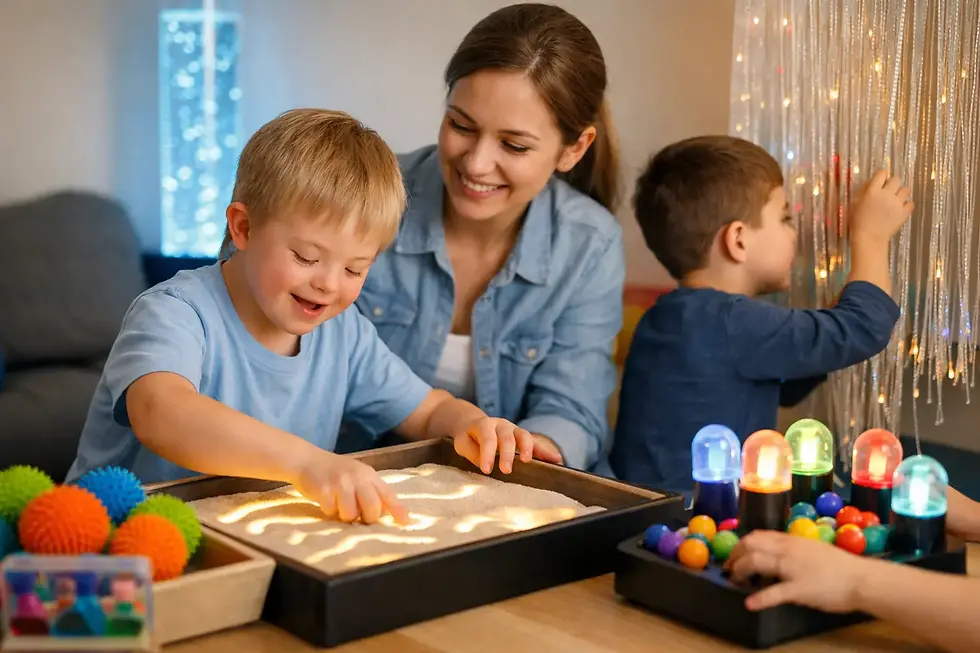
It also helps to think beyond designated sensory time. Tactile support can be built into ordinary routines through adapted writing tools, textured seating options, hands-on math materials, fidget objects, sensory bins with clear boundaries, or preparatory touch routines before grooming and transitions. For some learners, deep, organizing input to the hands or arms before seated work improves readiness. For others, access to preferred tactile materials during instruction supports attention and reduces stress.
The environment matters too. If touch in the room is unpredictable, noisy, and rushed, even well-chosen sensory tools may have limited effect. Calm presentation, clear expectations, and emotional safety often determine whether tactile input helps or hinders.
Tactile stimulation in schools and care settings
In group environments, tactile strategies work best when they are practical and sustainable. Staff need a shared understanding of why a support is being used, what success looks like, and when to stop or adjust. A sensory bin placed in the corner without a clear purpose can become one more unmanaged variable. A well-planned tactile routine, by contrast, can support smoother transitions and more meaningful engagement.
In classrooms, tactile options may be part of universal design as well as individualized support. Some students benefit from textured tools and manipulatives available to all. Others need a specific tactile plan connected to regulation, self-help, or participation goals. In residential or day-service settings, tactile support may be central to comfort, body awareness, and relationship-building, particularly for individuals with complex communication needs.
This is also where staff training makes a visible difference. Teams are more confident when they can distinguish between sensory preference, sensory distress, and behavior that serves another function. They are also better able to adapt touch-based approaches without reducing the person’s autonomy.
Safety, consent, and dignity come first
Because tactile work involves the body, ethical practice is not optional. Consent, assent, and respect for personal boundaries should guide every intervention. Even when a person has limited verbal communication, professionals can still observe body language, facial expression, muscle tension, and withdrawal cues.
Supportive tactile practice means offering, not imposing. It means preparing the person before contact, using consistent routines, and stopping when signs of distress appear. It also means recognizing that some responses to touch may be shaped by past experiences, culture, health status, or trauma, not only sensory processing.
Documentation helps here. When teams record what type of input was offered, under what conditions, and with what response, they can make better decisions and avoid repeating strategies that are ineffective or intrusive.
Building tactile support into everyday practice
The strongest results usually come from consistency rather than novelty. A few well-matched tactile supports used predictably are more valuable than a large collection of materials used without a plan. Professionals do not need to create elaborate sensory setups to make progress. They do need to align sensory choices with educational goals, regulation needs, and daily routines.
That may involve adjusting materials for art and pre-writing, creating calmer preparation for self-care tasks, or using tactile activities to support co-regulation before demands increase. It may also involve consultation and staff development when a learner’s needs are complex or the team is unsure how to proceed. Services such as those offered by Special Needs Toys Norway can help translate sensory theory into practical, setting-specific solutions for schools and institutions.
Tactile support is most effective when it helps a person feel safer, more capable, and more ready to engage. That is the real measure. Not whether the activity looked sensory enough, but whether it created more access to learning, connection, mastery, and joy.
The most useful question to bring back to your setting is a simple one: what kind of touch helps this person meet the day with less stress and more possibility?
You Are Not Alone – We Are Here to Help
Finally, we want to remind you that you are not alone. Many families, schools, kindergartens, and care institutions face similar challenges—and there are effective solutions. We have extensive experience supporting and guiding others in finding practical, tailored approaches to accommodation, sensory support, and inclusion.
If you would like more concrete support, we encourage you to explore our courses and consultations. Together, we can create a better everyday life.


Comments