Vestibular Stimulation in Daily Practice
- Shahram Ariafar
- Apr 6
- 6 min read

A student who cannot stay seated during circle time is often described as distracted. A child who avoids swings may be labeled anxious. An adult in a care setting who becomes distressed during transfers may be seen as resistant. In many cases, the missing piece is not motivation or behavior management. It is sensory processing, and vestibular stimulation is often part of that picture.
The vestibular system helps us register movement, gravity, speed, and head position. It supports balance, posture, motor planning, visual stability, and a basic sense of physical security. When this system is underresponsive, overresponsive, or difficult to interpret, the effects can show up in learning, transitions, attention, emotional regulation, and participation in everyday routines.
For special education professionals, therapists, and support teams, vestibular input is not a trend or a stand-alone activity. It is a clinical and pedagogical consideration that needs to be observed carefully and used with purpose.
What vestibular stimulation actually does
Vestibular stimulation refers to movement-based input that activates the inner ear structures responsible for detecting motion and spatial orientation. This includes linear movement, rotary movement, changes in head position, and shifts in body position relative to gravity.
That sounds technical, but the practical implications are very concrete. Vestibular input helps learners know where their body is in space. It contributes to postural control so they can sit upright, move through the room, climb stairs, and coordinate both sides of the body. It also supports oculomotor control, which matters for reading, copying from a board, and visually tracking classroom materials.
Just as importantly, vestibular input can affect regulation. For some learners, movement organizes the nervous system and improves readiness for instruction. For others, the same movement can feel disorienting, alarming, or overstimulating. That is why the right question is rarely, “Should we use movement?” It is, “What kind of movement, for whom, how much, and at what time?”
Why vestibular stimulation matters in educational settings
In schools and care environments, vestibular needs are often present but easy to misread. A learner may constantly rock on a chair, tip backward, run in hallways, spin repeatedly, or seek upside-down positions. Another may resist elevators, playground equipment, uneven ground, or quick position changes. Both profiles can relate to vestibular processing, but they do not need the same response.
This matters because vestibular differences can shape access to learning. A student who uses movement to stay regulated may not benefit from repeated reminders to sit still. A learner who becomes distressed by unexpected motion may need environmental adaptations before they can participate comfortably in group routines. Staff who understand this are better able to separate sensory needs from defiance, reduce avoidable stress, and build more effective supports.
When vestibular input is used well, the goal is not simply more movement. The goal is better participation, stronger body organization, increased confidence, and greater emotional safety.
Signs a learner may need closer observation
There is no single vestibular profile, and behavior alone does not confirm a sensory cause. Still, some patterns should prompt professional reflection.
A learner may appear to crave intense movement and have difficulty getting enough of it. They may spin without seeming dizzy, move constantly, crash into furniture, or struggle to settle after active play. Another learner may become nauseated, fearful, rigid, or upset with swinging, climbing, tilting, or fast transitions. Some show mixed patterns depending on fatigue, anxiety, health status, or environmental demands.
You may also notice related challenges: poor balance, slumped posture, difficulty crossing midline, trouble with stairs, delayed motor planning, or visual strain during seated tasks. In these cases, vestibular processing may be one part of a broader sensory-motor picture.
Observation is most useful when it is specific. Instead of saying a student “seeks movement,” document what kind of movement, when it happens, what comes before it, and what changes afterward. That level of detail leads to better decisions.
Using vestibular stimulation safely and purposefully
Vestibular input can be helpful, but it is powerful. More is not automatically better.
Start with the function of the activity. Is the goal alerting, organizing, calming, supporting transitions, or preparing for a fine motor or academic task? The answer affects the type, duration, and intensity of movement you choose. Fast rotary movement may energize one learner and overwhelm another. Gentle linear rocking may support calm for one person and increase unease for someone else.
Timing also matters. Some learners benefit from planned vestibular input before activities that require sitting, visual attention, or body control. Others need movement breaks between demands. In some cases, movement immediately before a complex cognitive task can make performance worse rather than better if the input is too intense.
Professional teams should also watch for signs that input is not being processed well. These can include changes in skin color, sweating, hiccupping, yawning, nausea, agitation, glassy eyes, sudden fatigue, or emotional dysregulation. A learner does not need to verbalize discomfort for the activity to be a poor fit.
For students or adults with complex needs, medical history is relevant. Seizure disorders, orthopedic concerns, visual impairments, trauma history, and severe postural instability all affect how movement should be introduced. Collaboration with occupational therapists, physical therapists, and other qualified professionals is often essential.
Practical ways to integrate vestibular stimulation
In many settings, the best vestibular support is not a dramatic intervention. It is thoughtful design.
A preschool classroom might use short movement routines before table work, with predictable options such as gentle rocking, crawling courses, scooter board activities, or supported balance tasks. An elementary classroom may benefit from structured transition movement, not as a reward, but as a regulation strategy built into the day. In a specialized program, staff may use adaptive seating, floor-based positioning, or carefully supervised swing work as part of a wider sensory plan.
For adolescents and adults, vestibular support can be embedded in functional activity. Walking routes, controlled stair use, movement-based music sessions, and supported exercise can all contribute when matched to the person’s profile. In care environments, attention to how individuals experience transfers, lifts, reclining positions, and transport is just as important as planned movement sessions.
The key is consistency and fit. Random movement breaks can help in the moment, but purposeful routines are more likely to build trust and support regulation over time.
Vestibular stimulation and sensory environments
A well-designed sensory environment can make vestibular work more effective because it reduces competing stressors and allows staff to control intensity. Lighting, noise level, visual complexity, floor space, and equipment placement all influence how movement is experienced.
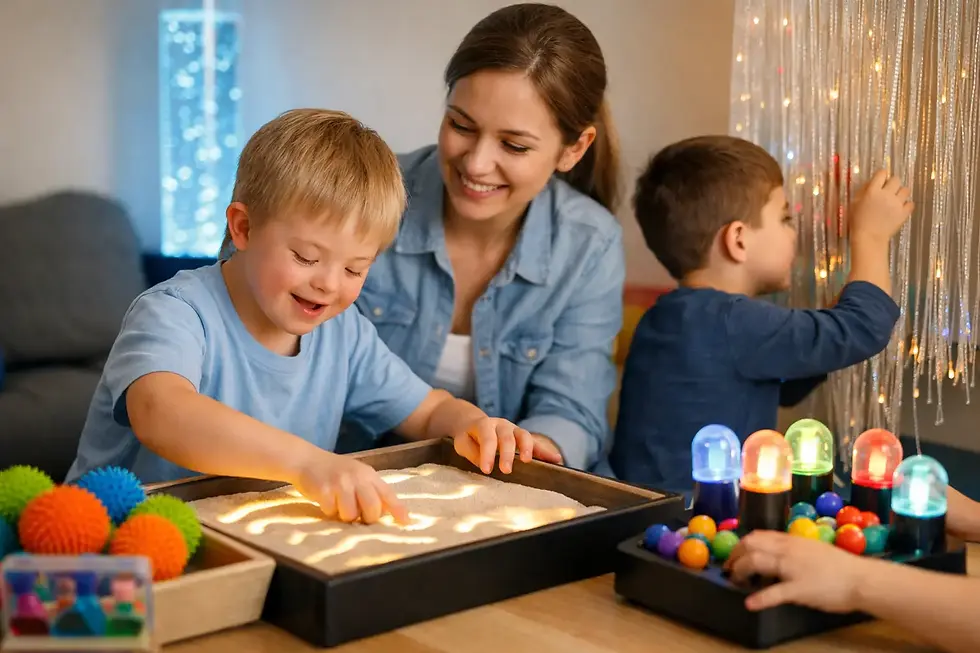
This is especially relevant in Snoezelen and multisensory spaces, where professionals can shape sensory input with greater precision. Vestibular activities tend to work best when staff are clear about the desired outcome and avoid layering too many intense inputs at once. A learner who is swinging, listening to loud music, watching moving light effects, and managing social demand at the same time may not be getting organizing input at all. They may simply be overloaded.
Thoughtful sensory environments support pacing. They allow movement to be introduced gradually, observed carefully, and adjusted without pressure. That is one reason many schools and institutions seek practical guidance when developing these spaces. The room matters, but professional use matters more.
Common mistakes professionals can avoid
One common mistake is assuming all movement is regulating. It is not. Another is using vestibular activities only after dysregulation appears, rather than proactively. Staff may also rely too heavily on equipment without understanding the sensory impact of speed, direction, duration, and predictability.
A more subtle mistake is separating vestibular input from the learner’s emotional experience. Trust, anticipation, communication, and choice all affect how movement is received. A child may tolerate a rocking activity with a familiar adult but resist the same activity in a noisy gym. An adult may accept graded movement when fully prepared but become distressed if the motion feels sudden or imposed.
This is why dignity has to stay central. Vestibular stimulation should never be something done to a person without attunement, consent where possible, and clear professional reasoning.
Building professional confidence with vestibular stimulation
For teams, confidence comes from observation, shared language, and structured implementation. Staff need to know what they are seeing, why they are trying a specific approach, and how they will measure whether it helps. That may include noting changes in attention span, transition success, postural stability, emotional regulation, or participation in learning tasks.
It also helps to move beyond one-person knowledge. When sensory strategies live only with a single therapist or experienced educator, consistency is fragile. When the wider team understands the principles, vestibular support becomes safer and more meaningful across the day.
At Special Needs Toys Norway, this is the heart of good sensory practice: translating theory into environments, routines, and professional decisions that increase mastery, learning, and joy. Vestibular work is rarely about a single piece of equipment. It is about creating conditions where a person can feel organized enough to participate.
The most helpful next step is often not adding more movement, but observing movement more carefully. When professionals slow down, notice patterns, and match input to real needs, vestibular stimulation becomes less of a sensory buzzword and more of what it should be - a respectful tool for regulation, access, and growth.
You Are Not Alone – We Are Here to Help
Finally, we want to remind you that you are not alone. Many families, schools, kindergartens, and care institutions face similar challenges—and there are effective solutions. We have extensive experience supporting and guiding others in finding practical, tailored approaches to accommodation, sensory support, and inclusion.
If you would like more concrete support, we encourage you to explore our courses and consultations. Together, we can create a better everyday life.


Comments