My Child Hits, Bites, or Screams - What Do I Do?

Updated: Apr 17
A child is screaming under the table, another has bitten a classmate, and an adult nearby is trying to keep everyone safe while also making sense of what happened. In those moments, the question is immediate and urgent: my child hits, bites, or screams - what do I do? For educators, therapists, and support staff, the answer needs to be both compassionate and practical.
These behaviors are often treated as discipline problems first. In practice, they are more often communication, overload, distress, or a lagging skill showing up in a way that is hard for everyone in the room. That does not mean the behavior is acceptable. It means the most effective response starts by asking what the behavior is doing for the child, not just how to stop it.
When my child hits, bites, or screams, start with safety
The first task is safety, not analysis. If a child is hitting, biting, or screaming at a level that puts themselves or others at risk, reduce stimulation, lower your voice, and create space. Too much language in the moment can increase overload, especially for children with sensory processing differences, communication challenges, trauma histories, or developmental disabilities.
Use short, concrete phrases. "I won’t let you hit." "You’re safe." "Hands down." "We’re moving back." A calm nervous system in the adult is often the strongest immediate intervention available.
This is also the point where professional teams sometimes make an understandable mistake. They try to teach, reason, or correct while the child is still highly dysregulated. But a child in fight, flight, or freeze is not available for reflective learning. Regulation has to come before instruction.
Look beyond the behavior
Hitting, biting, and screaming do not all mean the same thing. Two children may show the same behavior for entirely different reasons. One may bite during transitions because the room becomes noisy and unpredictable. Another may hit when a preferred activity ends because they do not yet have the language or impulse control to tolerate frustration.
That is why behavior should be read in context. What happened just before? What demand was placed? Who was nearby? Was there a sensory trigger, a communication breakdown, fatigue, hunger, pain, or social confusion? The more precisely teams observe patterns, the more effective support becomes.
Common functions behind the behavior
Sometimes the child is trying to escape a demand that feels too hard, too fast, or too unclear. Sometimes they are trying to gain access to something they want and do not know how to request appropriately. Sometimes the behavior provides sensory input or helps them block sensory overload. Sometimes it is a sign of panic, not defiance.
This is where professional judgment matters. If staff assume every outburst is "attention-seeking," they may miss pain, anxiety, sensory dysregulation, or an inaccessible environment. If they assume every incident is sensory, they may overlook skill deficits in waiting, flexibility, or communication. It depends on the child, the setting, and the pattern over time.
What to do in the moment
When escalation begins, your response should be clear, contained, and predictable. Stay physically and emotionally grounded. Reduce verbal demands. Remove nearby hazards. If peers are present, protect their safety without shaming the child.
Avoid rapid-fire questions such as "Why did you do that?" or "What’s wrong with you?" In an escalated state, those questions rarely help and can increase stress. Instead, offer structure. "We’re taking space." "First calm body, then talk." "I’m here."
If the child can use visuals, gestures, or simple choices, offer them. "Chair or beanbag?" "Water or quiet?" "Walk with me or sit here?" Choice can restore a sense of control, but only if the options are realistic and limited.
If biting or hitting is frequent, staff also need a shared safety plan. That includes who steps in, where the child can regulate, what language is used, and how other children are supported. Consistency across adults reduces confusion and often reduces escalation.
What to do after the incident
The teaching happens later, once the child is calm enough to process. This is the time to repair, reflect, and build replacement skills. A child may need help identifying what they felt, what happened in their body, and what they can do next time.
For some children, a full verbal conversation is appropriate. For others, a visual sequence, social narrative, or brief practice of a replacement action is more effective. The goal is not a forced apology. The goal is growth in regulation, communication, and safer behavior.
Teach the skill that is missing
If a child screams when demands change, they may need explicit support with transitions. If they hit when peers come too close, they may need direct teaching around personal space and body boundaries. If they bite when overwhelmed, they may need safer oral sensory options and earlier support before overload peaks.
Replacement skills should be concrete and observable. "Use your words" is usually too vague. "Say stop." "Show break card." "Tap adult shoulder." "Ask for squeeze pillow." These are specific actions adults can prompt and reinforce.
Prevention is where real progress happens
Professionals often feel pressure to manage incidents well, but the larger work is preventing as many incidents as possible. That means adjusting the environment, not just expecting the child to cope better in the same conditions.
Look closely at transitions, noise, lighting, waiting time, task demands, social density, and unpredictability. Many children who hit, bite, or scream are telling us that the environment is exceeding their current capacity. Prevention might mean shorter demands, clearer routines, visual supports, movement breaks, sensory tools, reduced crowding, or more preparation before change.
This does not mean removing every challenge. Children still need opportunities to build tolerance, flexibility, and mastery. But challenge should be calibrated. When the environment is consistently overwhelming, behavior becomes survival, not learning.
Sensory regulation is not a side issue
For children with sensory processing differences, behavior and sensory regulation are deeply connected. A child may scream because the room is painfully loud, hit because touch feels threatening, or bite because they are seeking strong oral input. Without understanding this sensory layer, teams may respond only at the surface level.
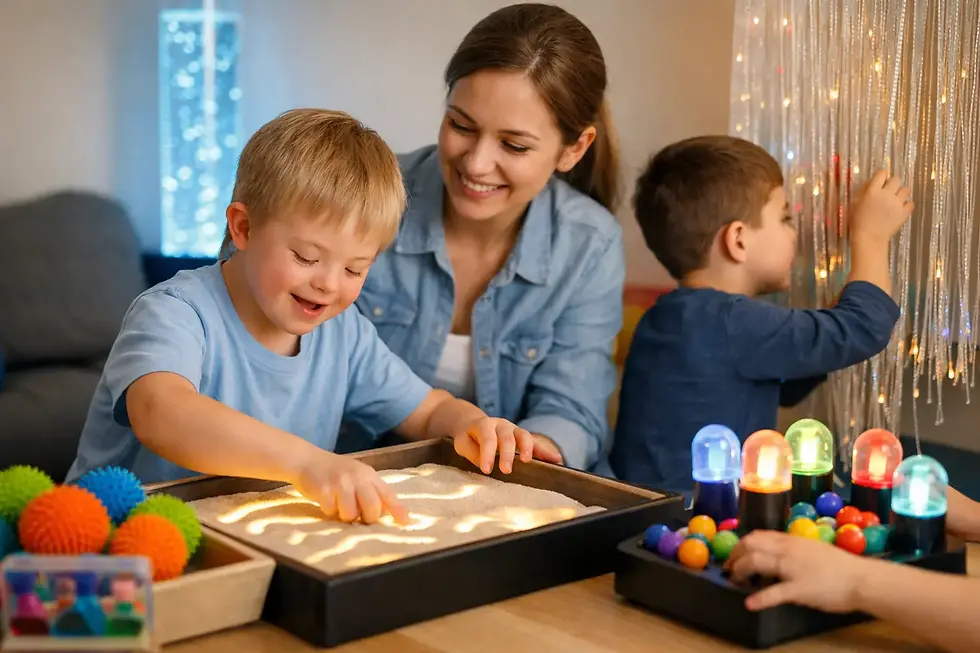
A sensory-informed approach asks what the child’s nervous system needs to stay organized. That may include predictable movement, deep pressure, quieter spaces, access to calming sensory input, or changes to the physical environment. It may also mean recognizing when a task is being delivered in a way the child cannot process.
This is one reason many schools and services benefit from structured sensory-based support and staff training. When teams learn to identify regulation needs early, they often see fewer crises and more engagement.
When behavior is persistent, collect better data
If the same pattern continues, informal impressions are not enough. Teams should document what happens before, during, and after incidents. Over time, this often reveals triggers that were not obvious in the moment.
Pay attention to time of day, staffing patterns, transitions, task type, sensory load, communication demands, and recovery time. Notice what reduces escalation too. Good data should not be used to label a child as aggressive. It should help adults make better decisions.
Questions worth asking as a team
Is the child understanding what is expected? Can they communicate no, stop, help, and break? Are demands matched to developmental level? Is there pain, fatigue, anxiety, or trauma to consider? Are adults responding consistently? These questions often lead to more meaningful change than asking how to increase consequences.
When consequences help, and when they do not
There are times when clear limits matter. A child does need to learn that hitting hurts, biting is unsafe, and screaming cannot control every situation. But consequences alone rarely solve the problem when the root issue is dysregulation, communication breakdown, or sensory overload.
A limit without support may stop behavior temporarily, especially with highly compliant children, but it often does not build the skills needed for the next hard moment. On the other hand, support without limits can leave staff feeling powerless and other learners unprotected. Effective practice requires both: firm safety boundaries and active teaching.
This balanced approach is especially important in inclusive and specialized settings, where dignity and accountability must go together.
Supporting the adults matters too
Children are not the only ones affected by repeated aggression or high-intensity screaming. Staff can become anxious, reactive, or inconsistent when incidents are frequent. That is not a failure of commitment. It is a sign that teams need training, shared methods, and space to reflect.
Professional confidence grows when adults understand what they are seeing and have a common plan for responding. In settings serving children with complex needs, this should not be left to individual instinct alone. It should be supported through practical systems, coaching, and environments designed for regulation as well as learning. This is the kind of work Special Needs Toys Norway centers in its training and sensory-based practice.
If a child is hitting, biting, or screaming, the goal is not simply to get through today with fewer disruptions. The deeper goal is to help that child experience more safety, more mastery, and more successful participation tomorrow. That starts when adults respond with calm, curiosity, and the willingness to adjust what surrounds the child - not just what is demanded of them.
You Are Not Alone – We Are Here to Help
Finally, we want to remind you that you are not alone. Many families, schools, kindergartens, and care institutions face similar challenges—and there are effective solutions. We have extensive experience supporting and guiding others in finding practical, tailored approaches to accommodation, sensory support, and inclusion.
If you would like more concrete support, we encourage you to explore our courses and consultations. Together, we can create a better everyday life.


Comments